A Lesson From the Helm
Our Tampa Bay Watch Discovery Environmental Education and Field Work Intern, Zachary Woodard, learned a few things while speaking with Captain Bob during his time at Tampa Bay Watch. Read on to learn more about lessons discovered at the helm.
When I started my internship at Tampa Bay Watch on the Discovery Boat, I expected to learn about marine life, restoration projects, and the ecosystems that make Tampa Bay unique. What I didn’t expect was how much I would learn just by spending time with the people who grew up with the bay.
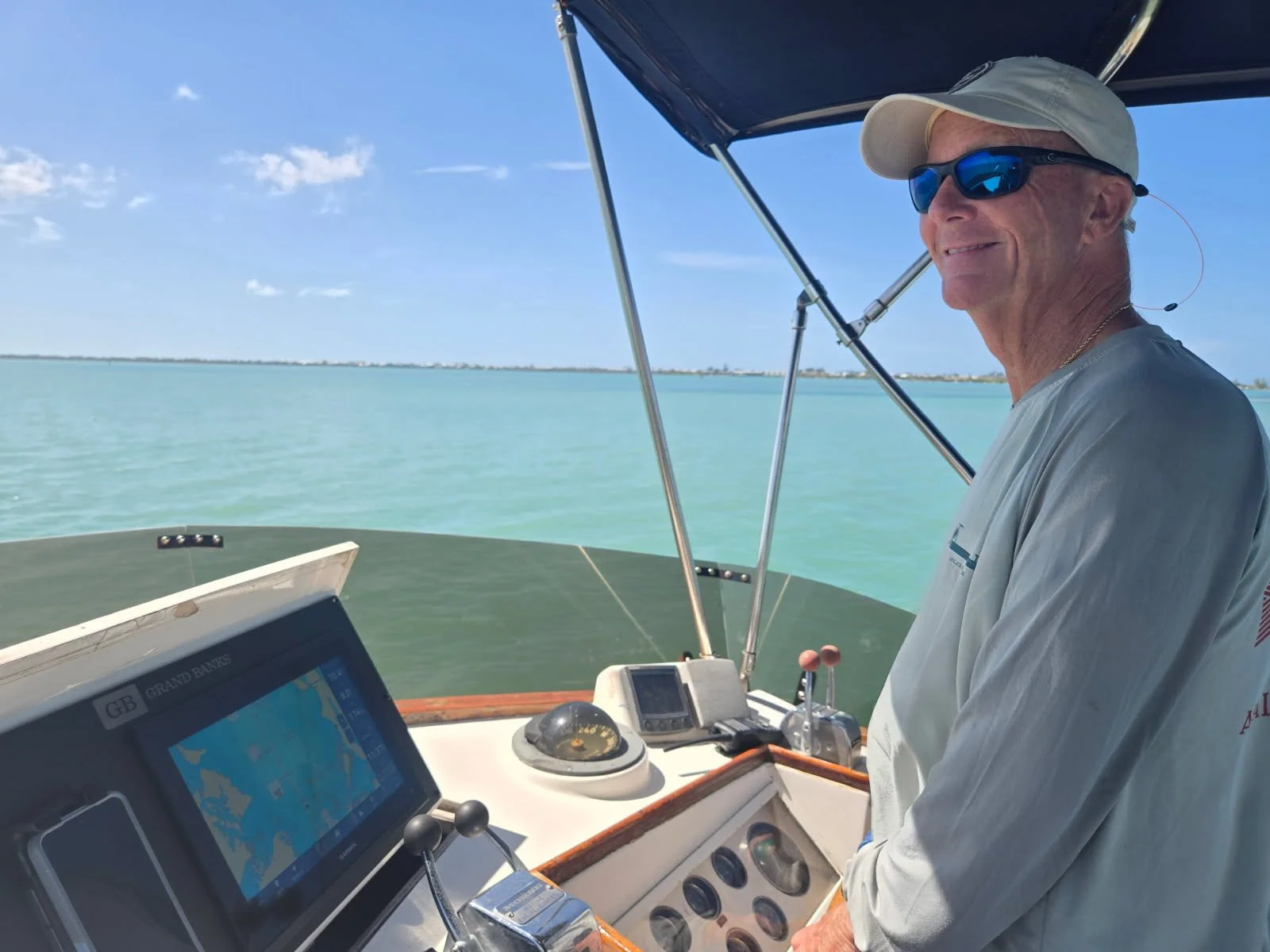
One of those people is Captain Bob.
Over the years, Bob has spent countless hours on the water—fishing, boating, volunteering with Tampa Bay Watch, and helping people experience the bay for the first time. Recently, he and his wife set out on a new adventure: a months-long boating trip around the eastern United States. While he was underway, I had the chance to talk with him about his time on the water and what he’s learned along the way
Seeing the Bay Through a Different Lens
I asked Bob what he gained from working with Tampa Bay Watch. His answer surprised me.
“I thought I already knew everything there was to know about the wildlife around here,” he said. But working alongside educators and biologists changed that.“I learned a tremendous amount about the plants and animals that live in the bay. Now when I’m boating around mangroves or bird rookeries, I see things differently.”
Instead of just noticing wildlife, he explained, you begin to understand how everything in the ecosystem connects—the birds feeding along the shoreline, the mangroves protecting the coast, and the small details that make the estuary such an important habitat.
As an intern, I’ve started to experience that shift myself. Growing up in Florida, you think you already know what lives in our waters. But what once felt like an open stretch of water where anything might be hiding beneath the surface now feels like a much more complex living system full of activity.
The Bay That Recovered
Bob has also had the rare chance to watch Tampa Bay change a lot over the years.
“When I was your age, there were no ospreys in Tampa Bay,” he told me. The only place he remembers seeing them regularly was farther south in Charlotte Harbor. Today, they are a common sight across the bay. Other species have recovered too. “Manatee populations used to be around a thousand animals,” Bob said. “Now it’s closer to ten or eleven thousand.”
Fish populations have also bounced back, including species like redfish, snook, trout, and tarpon that support both recreation and local jobs.
Much of that recovery began decades ago when cities stopped pumping untreated sewage directly into Tampa Bay. Reducing nitrogen pollution helped seagrass and fish populations return. “It’s amazing what improving water quality can do,” Bob said.
Today, Tampa Bay is considered one of Florida’s great environmental comeback stories.
Unexpected Paths
Bob’s connection to conservation didn’t begin on a boat.
Years ago, he helped start a company that sold environmentally friendly janitorial supplies to businesses across the country. The idea came from a simple moment.“We were walking through a hotel and saw a maid cart sitting in the hallway,” he told me. “We looked at all the supplies on it and thought wow, they must use a lot of this stuff.”
That observation turned into a business focused on non-toxic cleaning chemicals and recycled products.One of their most successful items was simply trash bags made from recycled plastic.
“We calculated that the amount of recycled plastic we sold every year kept the equivalent of about twenty-eight Chevy Suburbans worth of plastic out of landfills,” Bob said.
Eventually, he sold the company, but the environmental mindset stayed with him.
The Moments That Matter
While fishing stories and wildlife sightings are always memorable, Bob says the most rewarding moments often come from the people who step on the boat.
Especially kids.
When Tampa Bay Watch brings students out onto the water, many of them are seeing the bay up close for the first time. “Some of these kids live right here in St. Pete but have never experienced the bay,” Bob said. “They’re just blown away.” For many of them, seeing dolphins’ surface beside the boat or pulling marine life from a net is something they never knew existed right in their own backyard.
“You just wonder how many lives that might change,” Bob said. “Maybe one of them becomes a marine scientist. Maybe they just buy a kayak someday. But you know it makes an impact.”
Of course, not every memorable moment on the water is serious. Some are simply funny. Bob remembered taking a visitor from Boston tarpon fishing on a small boat in Tampa Bay.“We told him when these fish hit, you’ve got to hang on,” Bob said.The man stood ready with the rod in the middle of the boat. Then the tarpon struck.
The fish took off so fast that it dropped him to his knees and dragged him across the deck as it ran toward the front of the boat. “He slid all the way forward on his knees,” Bob laughed. “He almost lost the rod.”
Moments like that remind you how powerful the wildlife in Tampa Bay can be—and how unpredictable life on the water can be.
Talking with Bob during trips on the Discovery Boat made me realize that the most important lessons from time on the water aren’t always about fishing or boating.
Sometimes the biggest lesson is perspective.
Years of boating, fishing, and volunteering around Tampa Bay have taught Bob to notice things many people overlook—the return of ospreys, the improvement in water quality, and the excitement people feel when they experience the bay for the first time. The health of Tampa Bay didn’t happen overnight. It took decades of work from thousands of people who cared enough to help protect the water and the wildlife that live there.
Bob would be the first to say he’s just one of those people who showed up and helped. But my conversation with him—and the days we spent out on the boat—showed me how even small roles in conservation can make a difference.
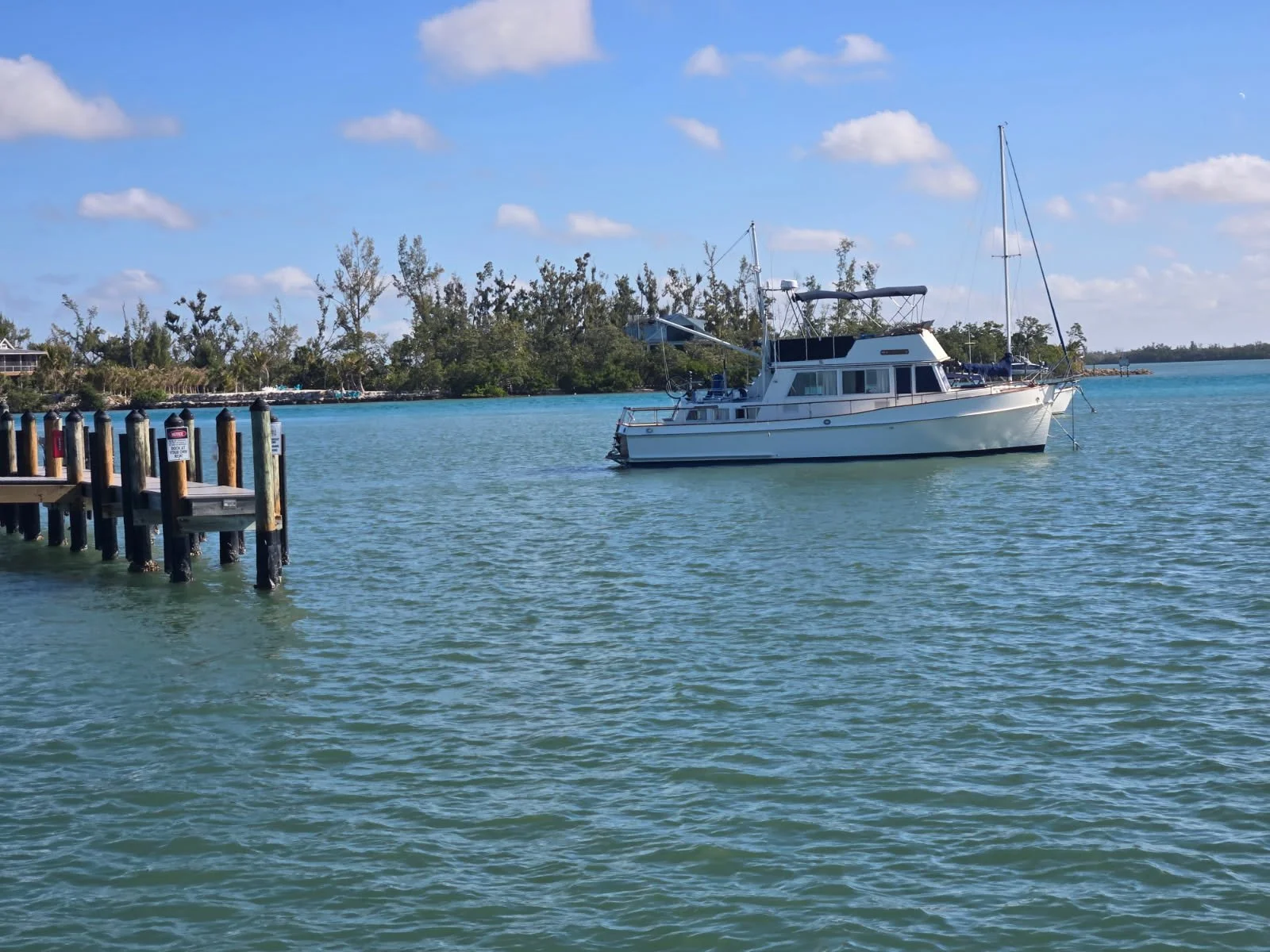
Now, as Counting Stars continues south past Boca Grande and toward new waters beyond Florida, one thing is certain: the lessons learned on Tampa Bay travel with you.
Fair winds, safe travels, and bon voyage, Captain Bob.